Mordants are dye fixatives that help natural dyes bind better to natural fibers, such as wool! I was literally shocked because there is quite a lot of rhubarb in Sweden (or really just the people I know?) that people grow in their backyards. Rhubarb leaves are typically thrown away or composted because they contain oxalic acid, which can damage your kidneys and can cause death in high amounts. I'm sure there are other potential uses for them but this is just what I have experienced. I had also just had several rhubarb treats, such as rhubarb sauce and rhubarb pie, so as you can imagine, I was quite shocked to hear that the leaves could be used for something. Additionally, I was lamenting how I would be mordanting my wool for my projects as I wasn't sure where to get aluminum acetate or iron powder...? (idk I'm not a dyer) and I didn't particularly want to purchase things online. Sourcing locally and foraging would help reduce transportation footprint and costs anyways.
During Midsummer, I was given the chance (haha) of seeing an insane rhubarb plant that was probably like 40 years old. It was humongous and even had several rhubarb flowers, which tends to only show with older, mature plants. The family didn't really eat rhubarb (or do much with it I think), so it just sat there! With the amount of rhubarb leaves within reach (through permission and family connections) and some simple research, I figured I had to start my summer dyeing with a vat from rhubarb leaves.
~ ~ ~
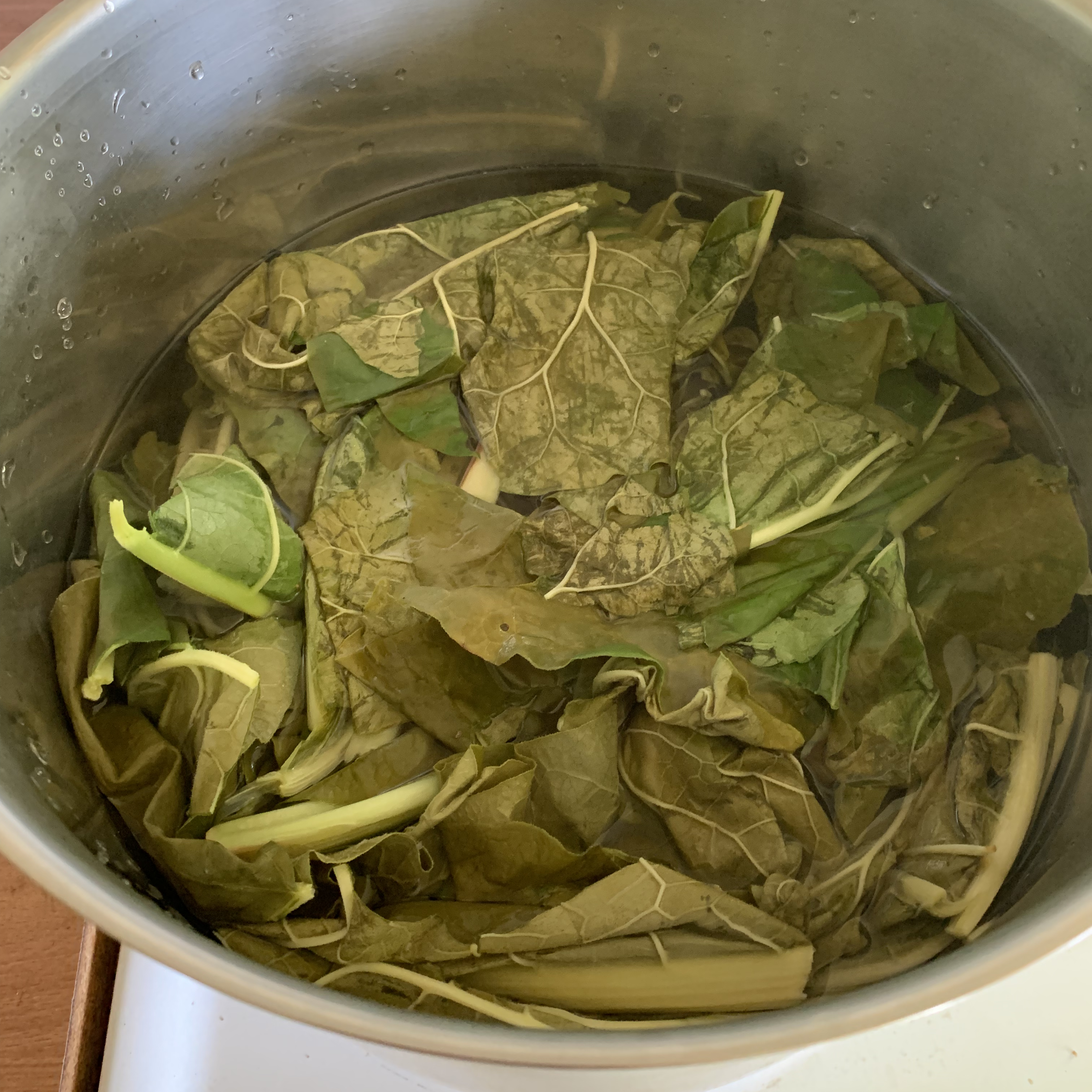
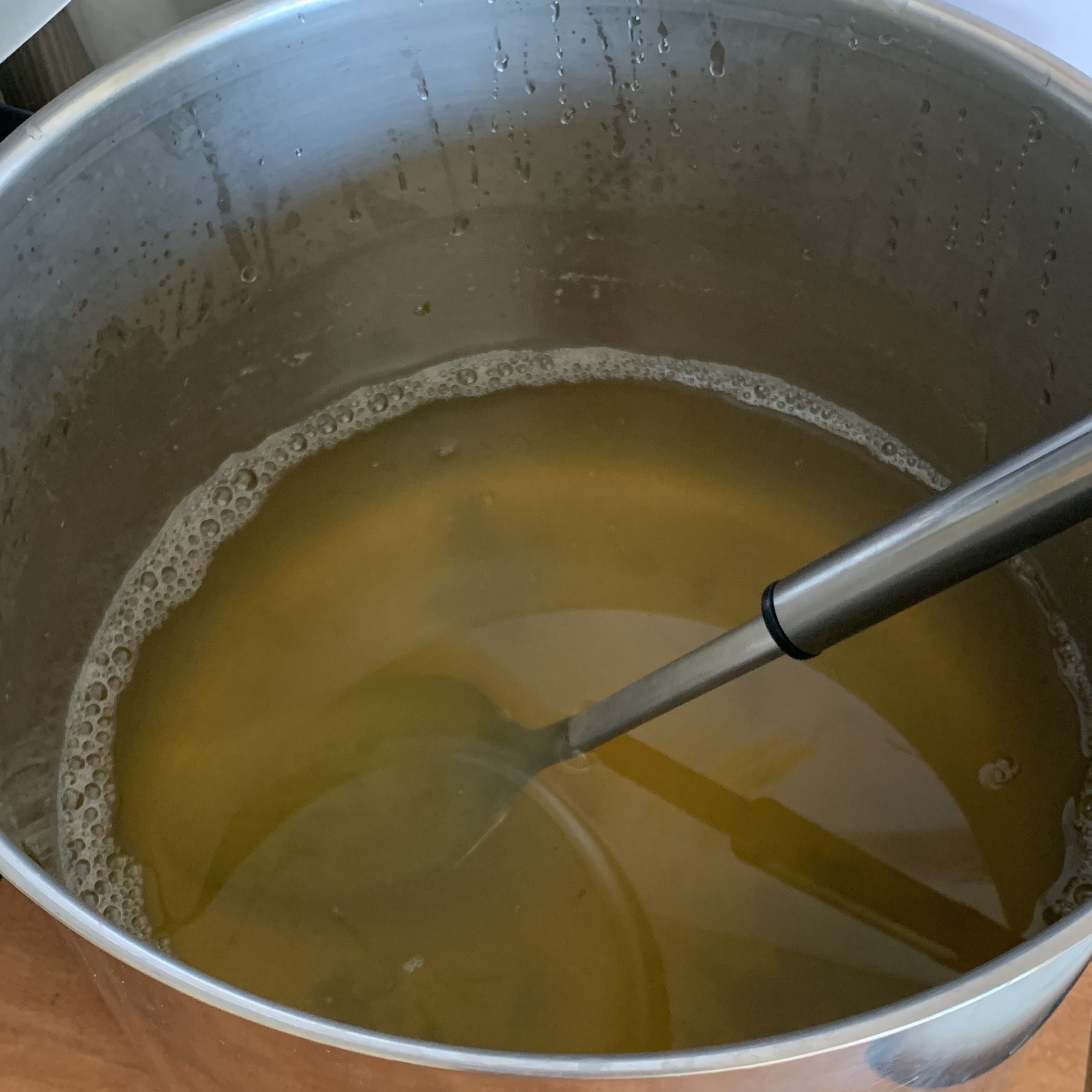
To start off, I collected the leaves of the rhubarb, leaving the stalks to be cooked and eaten at a later date. You want to weigh the leaves, with mine being at 780g.Chop up the leaves and add them to your dyepot! If you don't know this already, you typically don't want to use your dyepot for food after using it for dyeing. I thrifted a pretty big pot earlier this summer with the intention of using it solely for dyeing! I filled the pot with hot water, enough to cover the leaves in the pot. I brought it to a boil on top of the stove. Normally, you may want to do this outside as oxalic acid is toxic, but a well ventilated area works well too.